Tag: multispeciality hospital in ahmedabad

Early Signs of Heart Attack Many Patients Ignore
Heart

Early Signs of Heart Attack Many Patients Ignore

We’ve all seen the Hollywood version of a heart attack: a character suddenly gasps, clutches their chest with both hands, and collapses to the floor. While that can happen, the reality in 2026 is often much quieter and more deceptive. In many cases, the heart sends out “whispers” long before it screams. Unfortunately, because these signs are subtle, many people brush them off as age, stress, or a simple case of indigestion. Recognizing these early warning signs isn’t just about being cautious; it’s about saving your own life. When you catch a cardiac event in its “soft” stage, you prevent permanent damage to the heart muscle. Having the support of a reliable multispeciality hospital in Ahmedabad ensures that if those whispers start, you have the expert diagnostic tools and emergency care ready to intervene immediately. The Subtle Physical Red Flags The human body is an incredible communicator, but we have to learn its language. Heart distress doesn’t always start with pain; it often starts with a change in how your body handles its daily energy and rhythm. Unexplained Fatigue and Exhaustion If you suddenly find yourself too tired to finish your usual evening walk or feel “crushed” by fatigue after a standard day at the office, pay attention. This isn’t just “being busy.” When the heart struggles to pump blood effectively, it prioritizes vital organs, leaving your muscles feeling drained. Research suggests that nearly 50% of women experience unusual fatigue weeks before a major cardiac event. If you are feeling chronically wiped out, it might be time to schedule a comprehensive health checkup in Ahmedabad to look at your cardiovascular markers. Discomfort Beyond the Chest Pain from the heart doesn’t always stay in the chest. Because of the way our nerves are bundled, the brain can get “confused” about where the pain is coming from. This is called referred pain. You might feel a dull, persistent ache in your jaw, a tight sensation in your neck, or even pain between your shoulder blades. Many patients mistake this for a dental issue or a pulled muscle. If the discomfort is new and doesn’t go away with rest, don’t ignore it. Persistent Indigestion and Nausea The “heartburn” trap is perhaps the most dangerous deception. Because the lower part of the heart rests near the diaphragm and stomach, a heart attack can feel exactly like severe acid reflux or indigestion. If you have a “heavy” feeling in your stomach accompanied by a cold sweat or nausea, especially if you haven’t eaten anything unusual, don’t reach for an antacid. Reach for medical help. Overlooked Symptoms and Secondary Indicators Occasionally the heart shows its struggle in the systems that we would not necessarily equate with the chest. The marks are there, as you know where to find them, from your breath to your skin. Unusual Swelling and Joint Sensitivity Edema is caused by poor circulation. If your socks are leaving deep indentations in your ankles or your shoes feel tight by midday, it’s a sign that your heart isn’t circulating blood effectively. Interestingly, people often visit an arthroscopy surgeon in Ahmedabad for what they think is joint pain in the knees or ankles, only to find that the underlying issue is actually vascular inflammation or circulatory pressure. Skin Changes and Stress Manifestations Your skin is a window into your internal health. A slight bluish or grayish tint to the lips or fingernails (cyanosis) indicates that your blood isn’t carrying enough oxygen. Furthermore, chronic stress often shows up on the skin as breakouts or inflammation. While you might seek out dermatology services in Ahmedabad for the surface issue, these flare-ups can sometimes be the body’s way of signaling high cortisol levels that are putting your heart at risk. Taking Proactive Steps Toward Prevention The best way to survive a heart attack is to prevent it from ever happening. In 2026, modern medicine is about responding to the fire before the smoke emerges (i.e., predictive care). The Power of Routine Screening Waiting for symptoms is a risky strategy. A routine health checkup in Ahmedabad can identify “silent killers” like high blood pressure and asymptomatic cholesterol buildup. Modern diagnostics like the 2D echo or a stress test can see exactly how your heart is performing under pressure. Knowledge is your best defense; knowing your numbers allows you to make changes while they are still optional. Knowing When to Act Fast In cardiology, “Time is muscle.” Every minute you wait during a cardiac event, more heart tissue is at risk. The first 60 minutes are known as the “Golden Hour.” If you experience any combination of the symptoms mentioned today, don’t wait to see if they pass. Ensure you know the route to the nearest multispecialty hospital in Ahmedabad and have the number of a 24/7 hospital near me saved on your phone. Conclusion A heart attack does not necessarily go out with a bang. It begins more frequently with a strange feeling of tiredness, a case of stomachache that will not clear, or a funny aching in the jaw. With these minor red flags and regular screenings, you are putting your health story in your hands. Your heart works 24/7 for you; the least you can do is listen when it tries to tell you something is wrong. Trust your intuition; it’s better to have a “false alarm” at the hospital than to ignore a real one at home. Are you or a loved one currently experiencing any of these “quiet” symptoms, or is it perhaps time to finally book that overdue wellness check?
Posted by Aims Hospital
Arthroscopy Recommended for Knee
arthroscopy surgeon

When Is Arthroscopy Recommended for Knee or Shoulder Pain?

Knee and shoulder pain are among the most common musculoskeletal complaints affecting people of all ages—from athletes to working professionals and elderly individuals. While many cases can be managed with medication, rest, or physiotherapy, some conditions require more advanced evaluation and treatment. This is where arthroscopy becomes an important option. Arthroscopy is a minimally invasive surgical procedure that allows doctors to diagnose and treat joint problems using a small camera and specialized instruments. But the key question many patients have is: When is arthroscopy actually recommended? In this article, we’ll explore the conditions, symptoms, and scenarios where arthroscopy is advised for knee and shoulder pain, along with its benefits and recovery expectations. What Is Arthroscopy? Arthroscopy is a surgical procedure in which a small camera, called an arthroscope, is inserted into the joint through a tiny incision. This camera provides a clear view of the joint structures on a monitor, allowing the surgeon to identify and treat issues without making large cuts. It is commonly used for: Knee joints Shoulder joints Ankles, elbows, and wrists (less frequently) Because it is minimally invasive, arthroscopy offers faster recovery, less pain, and minimal scarring compared to traditional open surgery. When Is Arthroscopy Recommended for Knee Pain? Knee pain can result from injuries, wear and tear, or underlying medical conditions. Arthroscopy is typically recommended when conservative treatments fail or when a precise diagnosis is required. 1. Persistent Knee Pain Despite Treatment If knee pain continues even after: Medication Physiotherapy Rest Lifestyle modifications then arthroscopy may be advised to identify the root cause and treat it simultaneously. 2. Meniscus Tears The meniscus is a cartilage that cushions the knee joint. Tears can occur due to sports injuries or aging. Symptoms: Pain while twisting or bending Swelling Locking sensation Arthroscopy is commonly used to repair or remove the damaged part of the meniscus. 3. Ligament Injuries (ACL/PCL) Ligaments stabilize the knee joint. Injuries like ACL (Anterior Cruciate Ligament) tears are common in athletes. When arthroscopy is needed: Knee instability Difficulty walking or running Recurrent giving way of the knee Arthroscopic surgery allows precise ligament reconstruction. 4. Cartilage Damage Damage to the cartilage can lead to pain, swelling, and restricted movement. Arthroscopy helps: Smooth damaged cartilage Stimulate healing Prevent further joint deterioration 5. Loose Bone or Cartilage Fragments Sometimes, small fragments float inside the joint, causing pain and locking. Arthroscopy is used to: Remove these fragments Restore smooth joint movement 6. Knee Joint Inflammation Conditions like synovitis (inflammation of joint lining) may require arthroscopy when medication fails. When Is Arthroscopy Recommended for Shoulder Pain? Shoulder pain can be caused by injuries, repetitive strain, or degenerative conditions. Arthroscopy is recommended when symptoms persist or worsen over time. 1. Rotator Cuff Tears The rotator cuff consists of muscles and tendons that help keep the shoulder joint stable. Symptoms: Weakness in the arm Pain while lifting Difficulty sleeping on the affected side Arthroscopy is used to repair torn tendons with minimal tissue damage. 2. Shoulder Impingement Syndrome This occurs when shoulder tendons are compressed during movement. Symptoms: Pain while raising the arm Limited range of motion Arthroscopy helps relieve pressure by removing inflamed tissue or bone spurs. 3. Recurrent Shoulder Dislocation Repeated dislocations can damage ligaments and cartilage. Arthroscopy helps: Repair torn structures Stabilize the joint Prevent future dislocations 4. Frozen Shoulder (Adhesive Capsulitis) In severe cases where physiotherapy and medication fail, arthroscopy may be used to release tight tissues and restore mobility. 5. Labral Tears The labrum is a circular band of cartilage that helps keep the shoulder joint stable. Arthroscopy allows precise repair of labral tears, especially in athletes. Benefits of Arthroscopy Arthroscopy is widely preferred due to its advantages: 1. Minimally Invasive Small incisions reduce tissue damage. 2. Faster Recovery Patients can return to daily activities sooner. 3. Less Pain Compared to open surgery, post-operative pain is significantly lower. 4. Lower Risk of Complications Reduced risk of infection and blood loss. 5. Accurate Diagnosis and Treatment Surgeons can directly view the joint and treat the problem in the same procedure. When Arthroscopy Is NOT Recommended Arthroscopy is not always the first option. It may not be suitable for: Mild pain that responds to conservative treatment Advanced arthritis (in some cases) Patients with high surgical risk Doctors usually recommend arthroscopy only after evaluating all non-surgical options. Recovery After Arthroscopy Recovery depends on the type of procedure and the joint involved. Typical Recovery Timeline: Walking with support: Within a few days (knee) Shoulder movement exercises: Within 1–2 weeks Full recovery: 4–12 weeks Post-Surgery Care Includes: Physiotherapy Pain management Gradual return to activity Following professional medical guidance is essential for achieving the best possible recovery. When Should You Consult a Doctor? You should seek medical advice if you experience: Persistent knee or shoulder pain Swelling or stiffness Limited movement Joint instability Clicking or locking sensation Early diagnosis can prevent the condition from worsening and may reduce the need for surgery. Conclusion Arthroscopy has revolutionized the treatment of joint problems by offering a minimally invasive and highly effective solution for knee and shoulder pain. It is typically recommended when conservative treatments fail or when there is structural damage that requires surgical intervention. Understanding when arthroscopy is needed can help patients make informed decisions and seek timely medical care. With proper diagnosis, expert treatment, and rehabilitation, most patients can regain mobility and return to their normal activities. FAQs 1. Is arthroscopy painful? The procedure itself is done under anesthesia, and post-surgery pain is usually mild and manageable. 2. How long does arthroscopy take? It typically takes 30 minutes to 2 hours, depending on the condition. 3. Can arthroscopy cure all knee or shoulder problems? Not all conditions require or benefit from arthroscopy; it depends on the diagnosis. 4. Is arthroscopy safe? Yes, it is considered a safe procedure with a low risk of complications when performed by an experienced surgeon.
Posted by Aims Hospital
Full Body Checkup
Full Body Checkup

What Is a Full Body Checkup and Who Should Get It

A full body checkup is a complete health examination that helps you understand how healthy your body is. It is a group of tests and checkups done by doctors to find out whether anything is wrong inside your body. Some problems in the body do not show signs or pain until they become serious. That is why a full body checkup helps to find health problems before they become big trouble. In this blog, we will talk in simple and clear language about what a full body checkup is, why it is important, who should get it, what tests are included, and how it can help you stay healthy. We will make the topic easy so that even students in 5th to 7th grade can understand it clearly. Imagine that your body is like a big machine. To keep a machine working well, you have to check all its parts from time to time. Similarly, a full body checkup checks the different parts of your body like your heart, lungs, liver, kidneys, blood, bones, and many other organs. The goal is to find out if everything is working fine or if something needs care. A full body checkup is sometimes called a “health checkup” or “health screening,” and it usually takes a few hours to finish all the tests. Doctors recommend full body checkups to people of all ages, but especially to adults and those with health risks. These checkups are done in hospitals and clinics where doctors have the skills and machines to test different body systems. When you go for a checkup, doctors and nurses will collect samples like blood and urine, measure your height and weight, check your heart rate and blood pressure, and sometimes do scans or X-rays to look inside your body. All of this helps doctors understand how well your body is working. One of the first things people wonder is why they should go for a full body checkup if they are not sick. The answer is simple. Many diseases, like diabetes, high blood pressure, and kidney problems, begin without any pain or clear signs. If these conditions are not found early, they can grow worse and create bigger problems later. For example, if high blood pressure is not known early, it can affect the heart and brain and may cause a heart attack or stroke. That is why doctors ask people to get regular full body checkups, especially after a certain age or if there is a family history of diseases. A full body checkup usually begins with questions about your health history. The doctor will ask about your eating habits, exercise, family history of diseases, medicines you are taking, and any problems you may have noticed. This is followed by a physical examination. The doctor may listen to your heart and lungs through a stethoscope, check your reflexes, and feel your abdomen to make sure your organs feel normal. Then come the tests. The most common part of a full body checkup is a set of blood tests. Blood tests can tell a lot about your health. They can check how well your kidneys and liver are working, how many red and white blood cells you have, whether you have infection or inflammation, and if you have problems like anemia or high cholesterol. Blood sugar levels are also checked to find out if you may have diabetes or are at risk of getting it in the future. Along with blood tests, doctors usually check urine. Urine tests are easy and help find kidney problems, urinary infections, and other body issues. Another important part of the checkup is checking your heart health. The heart is one of the most important organs in your body. It pumps blood and oxygen to every part of your body. If the heart has problems, it can affect your entire health. That is why tests like ECG (electrocardiogram) are done. An ECG checks how well your heart is working and whether there are irregular heartbeats or other heart issues. Sometimes doctors also recommend an ultrasound or a stress test to study the heart more closely. For serious heart issues or detailed diagnosis, doctors may suggest you consult a cardiologist ahmedabad or a heart specialist ahmedabad. These are doctors who are experts in heart problems and can guide you with the right treatment if needed. Apart from the heart, doctors also check your lungs. Lungs bring oxygen into your body and take out carbon dioxide. If lungs are not working well, you may feel short of breath or tired easily. Chest X-rays or pulmonary function tests can help doctors understand lung health. The checkup may also include a test to check bone health or calcium levels if needed. In older adults, bone problems can be common, so it is important to check whether the bones are strong and healthy. Your eyes and ears may also be checked during a full body checkup, although this depends on your age and any complaints you tell the doctor. Vision tests and hearing tests help doctors find any weakness so that treatment can begin early. Suggested eye or ear tests help prevent future problems that may affect daily life. In a full body checkup, doctors or technicians may also do an ultrasound of the belly area. This helps check organs like the liver, gall bladder, pancreas, and kidneys. Without this test, problems like stones in the kidney or gall bladder may go unnoticed for years. Sometimes, if needed, doctors may recommend more advanced scans such as CT scans or MRI tests to see detailed pictures of the inside of the body. Skin and hair are also parts of your body that tell a lot about your health. Many skin problems are related to allergies, vitamin deficiencies, or infections. If the doctor notices a skin issue, they may refer you to dermatology ahmedabad experts. Dermatology is the area of medicine that deals with skin, hair, and nail issues. A dermatologist can help treat conditions like acne, eczema, allergies, and more. Women and men may have special tests during a full body checkup. For example, women may have tests related to breast health or pelvic ultrasound, while men may have tests related to prostate health. These tests are especially recommended after a certain age or when there is a risk of cancer in the family. Speaking of cancer, some full body checkups also include screening for common cancers such as breast, cervical, or prostate cancer. These tests help find cancer at a very early stage when treatment is more effective. A full body checkup should be done regularly. But how often should you do a checkup? This depends on your age, lifestyle, family history, and any health problems you already have. Generally, doctors recommend that adults above 30 years should get a full body checkup once a year. If you have a family history of conditions like diabetes or heart disease, or if you smoke or lead a very stressful life, the doctor may suggest more frequent checkups. Younger people who are healthy may begin full body checkups in their late twenties or early thirties, and depending on the findings, decide the frequency. For children and teenagers, full body checkups are not usually done every year unless there is a specific problem. Growth checkups, vaccinations, and regular school physicals are usually enough. But if the child has health complaints, a doctor will certainly recommend specific tests. Some people think that a full body checkup is only for older people. This is not true. Even children and young adults can benefit from preventive checkups if there are warning signs, such as lack of energy, sudden weight loss, difficulty breathing, frequent fever, stomach pain, or any unusual symptoms. Preventive health care can help people of all ages lead a healthy life. Many people may wonder whether they need to prepare before going for a full body checkup. The answer is yes. Some tests, especially blood tests, require you to fast for 8 to 12 hours before the test. Fasting means not eating or drinking anything except water. This helps the doctor get accurate results for tests like blood sugar and cholesterol. Your doctor will tell you in advance which tests need preparation so that you get the correct results. In major cities, people often go to larger health centers or hospitals that have many doctors and machines under one roof. These places often offer comprehensive packages for full body checkups. These are planned to include many important tests so that you do not have to come again and again. A multispeciality hospital in ahmedabad is one example where many kinds of doctors and tests are available in one place. These hospitals have specialists in different areas of medicine, trained staff, and advanced machines to give you a complete health report. Some people think that going for a full body checkup will cost a lot of money, and that prevents them from getting it. But it is important to understand that early detection of diseases can save much more money in the long run. Treating advanced diseases costs a lot more compared to preventing them or treating them early. Moreover, many clinics and hospitals offer packages at affordable rates, and if you have insurance, parts of it may be covered. It is always better to ask the hospital or clinic about the cost and what tests are included so that you can choose a checkup plan that fits your needs. Another question people often ask is whether it hurts to get a full body checkup. Most tests in a checkup are painless. Blood tests involve a small prick to take a small amount of blood. Some people feel a tiny pinch, but it does not last long. Tests like X-rays, ECG, and ultrasound are completely painless. If there is any special procedure, your doctor will explain it to you before doing it so you know what to expect. When the full body checkup is completed, the doctor will analyze all the results and prepare a health report. This report shows whether each part of your body is working well or if something needs attention. The doctor will explain the results in simple words and tell you what steps you need to take. If any problem is found, the doctor will tell you how to treat it and what lifestyle changes may help. For example, if blood sugar is high, the doctor may ask you to eat less sugary food and exercise regularly. If cholesterol is high, the doctor may suggest dietary changes and medicines. If any serious condition is found, the doctor may refer you to a specialist who can treat that particular problem. For example, if your doctor finds that you may need a specific operation on a joint, like knee or shoulder, they may refer you to an arthroscopy surgeon in ahmedabad who specializes in joint problems. An arthroscopy surgeon uses small cameras and tools to treat joint problems without large cuts, which helps in faster recovery. People often feel nervous about health checkups because they fear bad results. But it is important to understand that a full body checkup is a tool for safety, not something to fear. Early detection helps you take control of your health, make changes, and live a longer and healthier life. When you know your body’s condition, you can work with your doctor to prevent illness and stay strong. A healthy lifestyle also plays a big role in keeping your body well. Eating balanced meals with fruits, vegetables, whole grains, and proteins helps the body stay strong. Drinking enough water, getting enough sleep, and doing regular physical activity keep your heart, lungs, and muscles healthy. Avoiding tobacco, reducing sugary and junk foods, and managing stress with hobbies, meditation, or time with family and friends are also important. A full body checkup tells you where you stand, and then you can work on habits that improve your health. In conclusion, a full body checkup is a detailed set of tests that examines your body’s systems to find hidden health problems before they become serious. It includes blood tests, heart and lung checks, scans, and sometimes special tests for specific organs. It is especially important for adults, people with family history of disease, and those with unhealthy lifestyles. Regular checkups help find problems early, guide healthy living choices, and give peace of mind. When you take care of your health today, you build a stronger and healthier future. So, remember that getting regular checkups and following your doctor’s advice is one of the best gifts you can give to your body and your loved ones. Your health is your wealth, and a full body checkup is the key to protecting it.
Posted by Aims Hospital
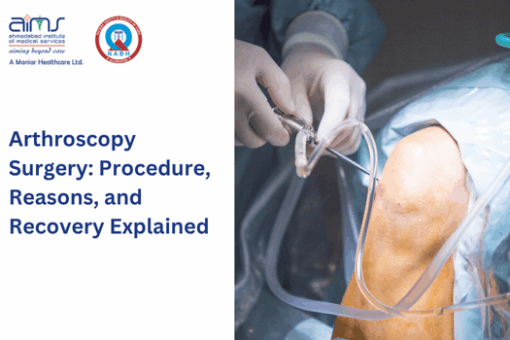
Arthroscopy Surgery: Procedure, Reasons, and Recovery Explained
arthroscopy surgeon

Arthroscopy Surgery: Procedure, Reasons, and Recovery Explained

If your doctor has recommended Arthroscopy you might feel nervous or unsure about what it really means. Don’t worry you’re not alone. The word surgery can sound really scary but Arthroscopy is actually one of the least invasive ways to treat your joint problems. Connect with the right arthroscopy surgeon in Ahmedabad and they can help you in the best way. What is arthroscopy? According to experts at multispeciality hospital in Ahmedabad Arthroscopy is a type of a minimally invasive surgery that means that the doctor doesn’t need to make any big cuts Like in a traditional surgery. Instead they make few small holes near the joint and use a thin tube with a camera on it known as Arthroscopy to look inside your joint. The camera sends image to the screen allowing your doctor to see what’s going on in your joints whether it’s your knees shoulder ankle elbow wrist or even your hip. If something needs fixing they use some special through the same hole to treat it. Why is Arthroscopy done? Even before you visit specialist hospital you need to understand why Arthroscopy is actually done. It helps doctors diagnose and treat joint issues. It is commonly used when you have joint pain swelling or stiffness that just won’t go away. Your X-ray or MRI scan don’t give clear answers or there is a tier like in the manicures or rotor cuff then you need the surgery. It’s often the next step when physical therapy for medication has not helped you. How to prepare for arthroscopy? Before your surgery experts at 24/7 hospital near me will actually go over your medical history and might ask you for some tests like blood work and ECG or even imaging scans. You will be likely be told not to eat or drink for several hours before surgery. The doctors might even stop certain medications especially blood thinners. You need to arrange a ride home as you won’t be able to drive. Your doctor or nurse will give you a clear instruction to follow and it’s very important to stick to them. What happens during the procedure? Arthroscopy is usually done in hospital in Ahmedabad or surgical center depending on the area being treated and your health condition you might have local anesthesia or regional anesthesia. Once you are numb or asleep the surgeon will make a small cut around the joint. The arthroscope is inserted to look inside sterile fluid might be pumped into expand the joint and give a better view. If needed tiny tools are also inserted to fix the problem. After the repair the tools are removed and the cuts are closed with stitches or small bandages. The entire procedure often takes less than an hour but it could be longer depending on what’s being treated. What to expect after arthroscopy? Most people go home the same day. The doctor might prescribe painkillers or suggest over the counter medications..  Depending on your surgery you might need crutches or sling or a brace for few days. You will likely be told to rest but also to gently move the joint to avoid some stiffness. Don’t overdo it follow your doctor’s advice. Arthroscopy might sound like a big deal but in reality it’s a smart and safe way to find and fix joint issues without large cuts or long hospital stays. If you have been struggling with joint pain or limited movement the procedure can offer relief answers and faster to return to normal life. Connect with experts at AIMS care now.
Posted by Aims Hospital