

Having chronic joint pain may seem like your world is narrowing gradually. You can no longer enjoy activities you used to enjoy because of the morning walk, gardening, or even spending time with your grandchildren; you always calculate how much the pain will be. When you find yourself not taking steps or depending on painkillers daily, you are not dealing with a bad knee or a stiff hip; you are losing your independence.
By 2026, orthopedic medicine will be at a point where the elderly will no longer be considered a last resort to joint replacement. It is an active, technologically advanced cure for any person who wants to regain his or her quality of life. It can be the knee, hip, or shoulder, but the aim is the same, to get you back on your feet without a second thought. The initial step of the journey is the selection of a specialist hospital, which means that all the steps, starting with diagnosis and continuing with the recovery, should be performed by a multidisciplinary team of specialists.
The Pillars of Pre-Surgical Preparation
The Essential Health Check-up in Ahmedabad
A surgeon must be aware that your inner engine is working well before he even thinks of an implant. The initial step that cannot be compromised is a thorough health checkup in Ahmedabad. This is not only concerning your joints; it is concerning your heart, lungs, and metabolic well-being. These screenings help doctors to detect and stabilize conditions such as diabetes or hypertension. By making sure that you are at your healthiest prior to the surgery, you are greatly reducing the chances of anesthesia complications and making sure that your body is getting the nutritional assets it requires to repair bone and tissue.
Specialized Imaging and Mapping
The days of one-size-fits-all implants are gone. Surgeons today map 3D to customize the operation to your anatomy. This is where an interventional radiologist in Ahmedabad comes in. These experts assist in mapping the vascular health and bone structure surrounding the joint, using advanced CT and MRI imaging. This information can enable the surgical team to foresee any difficulties and select an implant that is precisely fitted to the geometry of your body with sub-millimeter accuracy.
Pre-habilitation and Mental Prep
Prehab is a technique to tighten the muscles surrounding the joint prior to the surgery. The better your quadriceps are before a knee replacement, or your glutes before a hip replacement, the sooner you will be back on your feet. It is also important to be mentally prepared. Knowing the schedule of recovery and also fall-proofing your home by taking out loose rugs and putting grab bars in the home will make sure as you come out of the hospital, you have a home that is ready to help you recover as you are.
Advanced Surgical Techniques: Knee, Hip & Shoulder
Knee Replacement and Robotic Precision
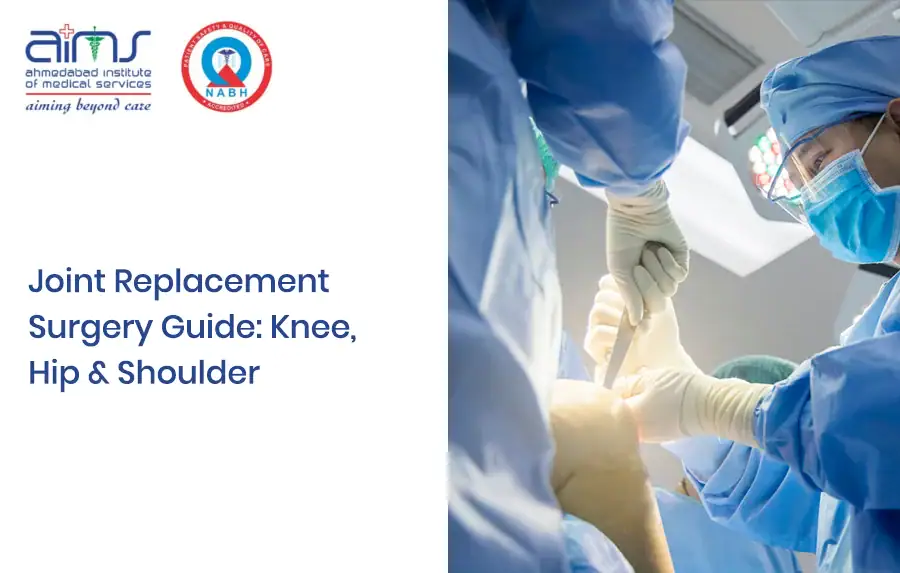
The knee is a complicated hinge, and the success of the knee is based on perfect alignment. The robot assistance is now being used in many major Orthopedics and Trauma centers when performing total or partial knee replacements. This does not imply that a robot carries out the surgery, but instead, it gives the surgeon real-time feedback to make sure that the bone is carved and the ligaments are balanced in an unbelievably accurate way. This degree of accuracy is why most patients in a specialist hospital are now capable of walking and making their first steps within only 24 hours of the operation.
Hip Replacement: The Direct Anterior Approach
In the case of hip replacement, the hip-replacement surgeon has adopted the “direct anterior approach,” which has become popular with active patients. In contrast to the conventional procedures, the technique enables the surgeon to access the hip joint without cutting through the muscles. This muscle-sparing technique will lead to much less post-operative pain and lower chances of dislocation. Combined with new bearings made of ceramic onto polyethylene, these new hips are expected to have a lifespan of 25 or more years, even in younger and more active patients.
Shoulder Replacement and Arthroscopy Integration
The surgery of the shoulder can be more of a delicate matter. It could be an anatomical replacement or a reverse shoulder replacement (commonly done to people with severe rotator cuff damage), but the emphasis is placed on restoring range of motion. An arthroscopy surgeon in Ahmedabad tends to be instrumental in this, with a minimally invasive procedure of the so-called keyhole techniques to repair the surrounding soft tissues as the joint is restored. This is a two-pronged method that makes the new joint to provide structural support that makes it easy to lift, reach, and rotate.
Recovery, Rehabilitation, and Long-Term Success
Interventional Radiology in Pain Management
The key to early movement is managing pain. In 2026, we are no longer heavily dependent on oral painkillers. An role of a radiologist can do targeted nerve blocks or image-guided cryoablation. The patients are able to be more engaged in the process of their physiotherapy by having the pain signals blocked at the source without the same grogginess or side effects of traditional opioids. This is a game-changer in early-stage recovery with proactive pain management.
The Physiotherapy Roadmap
The magic is performed through physiotherapy. At the initial stage, emphasis is made on avoiding stiffness, which is the main adversary of a new joint. Together with your therapist, you will be taken through exercises that will slowly expand your scope of movement. Further on, it is replaced with functional training: how to use the stairs, drive a car, and eventually turn back to activities such as cycling, swimming, or trekking. It is not merely to move but to move confidently.
Life After Joint Replacement
The new joints come with their own set of few new rules, which are quite positive. Most activities are now back on the table, although high-impact exercise such as long-distance running is typically avoided in order to avoid wear and tear. Follow-ups and regular health checkups will make the implant stable over decades. The best payoff of this trip is the quality of life, the possibility to walk in a park or a grocery store without counting every step in terms of pain.
Conclusion
Joint replacement is a process of being bound to being free. It is no longer about managing pain but about its eradication. Having an arthroscopy surgeon for knee & shoulder is the new reality of world-level orthopedic care.
Do you have a particular joint replacement (knee, hip, or shoulder) that you are researching, or are you still in the “diagnostic stage” and seeking the right specialist?
