
Joint pain may gradually be influencing daily life activities such as climbing stairs to picking up groceries. Some individuals in Ahmedabad with pain in the knee, shoulder, or ankle usually seek ways of getting the least invasive and most reliable information to enable them to make an informed decision before they check out an arthroscopy surgeon in Ahmedabad. The use of arthroscopy has also emerged as one of the most widely used methods of diagnosing and treating joint complications due to its accuracy, reduced incisions, and quick recovery.
What Is Arthroscopy Surgery?
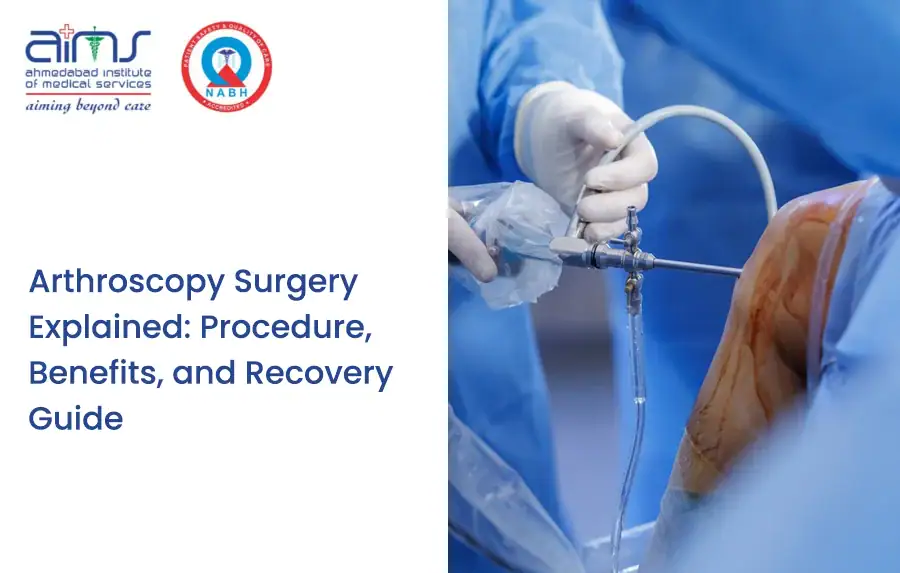
Arthroscopy is a simple surgery, which involves a minimally invasive method of diagnosing and treating joint-related disorders. Surgeons do not cut a large opening; rather, they place a small camera inside the joint known as an arthroscope using a small opening. This gives a clear insider picture of the joint on a screen that assists the surgeons to identify and treat the problems with high precision.
Common Conditions Treated Through Arthroscopy
- Meniscus tears
- ACL injuries
- Shoulder rotator cuff tears
- Cartilage damage
- Loose bone fragments
- Constant inflammation of the joints.
Arthroscopy is also very common in the major medical centers, including the advanced medical institutions like AIIMS Hospital in Gujarat, which have standardized international procedures to carry out the joint surgeries.
How the Arthroscopy Procedure Works
1. Pre-Surgery Evaluation
A thorough examination is done which might involve X-rays, MRI and a general health check up in Ahmedabad to ascertain the fitness of the patient to undergo anesthesia and surgery.
2. During the Procedure
The affected joint is surrounded by small (typically 0.5-1 cm) incisions. The arthroscope has to be introduced so as to see inside the joint. Microsurgical tools are utilized in repairing or removing damaged tissues.
This process normally takes 30 minutes to 2 hours depending on the complexity.
Post-Surgery Monitoring
Patients are followed in the short term after surgery in case they have a reaction. Arthroscopy can be arranged in case of accidental traumas, when the emergency trauma center needs to stabilize the patient as quickly as possible.
Benefits of Arthroscopy Surgery
Minimally Invasive Approach
Small cuts imply much less damage to tissues, scarring, and after-operative pain.
Faster Recovery
The majority of the patients get back to light activities in days to weeks, depending on the joint and the kind of repair.
Lower Risk of Infection
The smaller cuts decrease the chances of infection as compared to the open surgery.
High Diagnostic Accuracy
Arthroscopy is in close proximity to the joint, has high magnification, and allows a direct diagnosis and correction.
Flexibility over a variety of joints.
It works well on knees, shoulders, wrists, ankles, elbows, and hips.
Recovery Guide After Arthroscopy
1. Rest and Joint Protection
The initial days should be spent without much movement. Weight-bearing joints may be advised to have crutches or braces.
2. Pain and Swelling Control
Pain is managed with the help of ice packs and medication. The elevation of the leg helps to decrease swelling as well.
3. Physiotherapy
Easy stretches are important to exercises to strengthen the body, which is essential to recovery in the long run.
4. Skin and Incision Care
Patients with sensitive skin can consult the professionals of dermatology in Ahmedabad in case they are irritated upon bandaged places.
5. Follow-Up Checkups
Frequent visits will make sure that the healing process is right and that the mobility is enhanced.
Wrap up!
Arthroscopy is still undergoing innovation in terms of high-quality imaging, precision of instruments, and better operations. It is true whether it is sports injuries or joint issues due to age. Knowing the process and the recovery enables patients to make informed decisions and have realistic expectations about their healing process.
